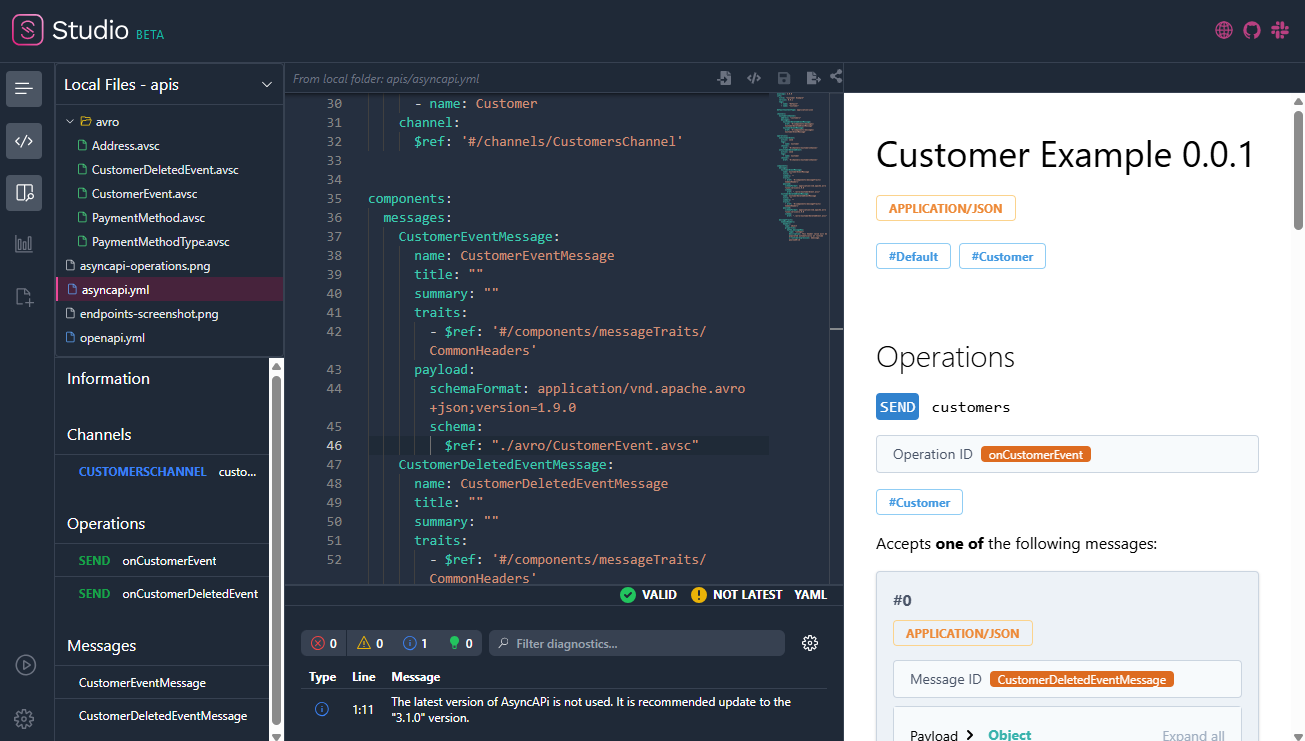
AsyncAPI Studio used to be a single-file editor and it could not resolve relative $refs, and that was a problem for real-world usage.
If you use Kafka and Avro, your spec references external .avsc schema files. Studio couldn’t resolve those and the preview would break. That single limitation made Studio impractical for real world multi-file documents.
AsyncAPI was also an in-memory editor. You paste a spec, validate it, close the tab. Nothing persists except a localStorage entry.
That model made sense for a quick preview. It is how Swagger Editor works. It is how Mermaid Editor works. But for real editing, you need to import/export the file and that was uncomfortable and error prone.
What Studio needed was to track where a document was opened from, and resolve relative references against that source. And if that source is a local folder, use the browser’s File System Access API to read and write files directly to disk.
So, I contributed #1224 to fix this, as part of the AsyncAPI Bounty Program. It shipped last week. Here’s what changed:
Load from URL. Use the menu button or just pass a ?url= parameter and Studio loads the remote document. Relative $refs resolve against the source URL, even after you edit.
Open local folders. Studio can request access to a local folder and show a file tree in the sidebar. AsyncAPI files show the live preview. .avsc and .md files get syntax-highlighted views.
And since you are already opening the whole folder, Studio now also previews Markdown files and Avro schemas as Mermaid diagrams. Your .avsc files are not just resolved, they are visualized.
Save back to disk. Changes go back to the original files. No export dialogs.
Relative $ref resolution. The root issue behind all of the above. Cross-file references now work whether the source is remote or local.
This is a different category of tool than what existed before. Closer to a native editor experience, in the browser.
I opened a discussion about where to take it next: dropping localStorage for folder and URL-based editing, adding OpenAPI and JSON Schema previews, LSP-based $ref navigation.
Try it at studio.asyncapi.com. And if you have opinions on the direction, the discussion is open.